

Hey there, fellow woodworkers! I'm a supplier of woodworking planers, and I often get asked, "What is the maximum thickness a woodworking planer can handle?" It's a great question, and in this blog, I'll break it down for you.
First off, let's understand what a woodworking planer does. A planer is a must - have tool in any woodworking shop. It's used to make the surface of a piece of wood flat, smooth, and of a consistent thickness. Whether you're working on a small DIY project or a large - scale furniture - making job, a good planer can save you a ton of time and effort.
The maximum thickness a woodworking planer can handle varies a lot depending on the type and model of the planer. There are two main types of woodworking planers: handheld planers and stationary planers.
Handheld Planers
Handheld planers are super convenient. You can carry them around easily and use them for quick touch - ups or small projects. But when it comes to the maximum thickness they can handle, they're a bit limited.
Most handheld planers can handle a maximum thickness of around 1/8 to 1/4 inch (3.2 to 6.4 mm) per pass. This is because they're designed to be lightweight and portable, and their motors and cutting mechanisms aren't as powerful as those of stationary planers. For example, if you have a rough piece of wood that's a bit uneven, you can use a handheld planer to take off a thin layer at a time. But if you need to remove a large amount of material quickly, a handheld planer might not be the best choice.
Stationary Planers
Stationary planers, on the other hand, are much more powerful. They're usually used in professional woodworking shops or by serious hobbyists. These planers come in different sizes and configurations, and their maximum thickness capabilities can vary widely.
Smaller benchtop stationary planers can typically handle wood up to 3 to 4 inches (76 to 102 mm) thick. These are great for medium - sized projects like making tabletops or cabinet doors. They're relatively affordable and can fit in a home workshop.
Larger industrial - grade stationary planers, though, can handle much thicker wood. Some of these heavy - duty machines can handle wood up to 8 inches (203 mm) or even more in thickness. These are used in large - scale furniture manufacturing, where thick pieces of wood are often required.
Factors Affecting Maximum Thickness
There are several factors that can affect the maximum thickness a woodworking planer can handle.
Motor Power: A more powerful motor can drive the cutting blades through thicker wood more easily. Planers with higher horsepower motors are generally able to handle thicker stock. For example, a planer with a 3 - horsepower motor will have an easier time cutting through thick wood compared to a 1 - horsepower one.
Cutting Blade Design: The design and quality of the cutting blades also play a crucial role. Blades with a sharper edge and better geometry can cut through wood more efficiently. Some planers use helical cutterheads, which have multiple small cutting edges arranged in a spiral pattern. These cutterheads can handle thicker wood more smoothly and with less tear - out.
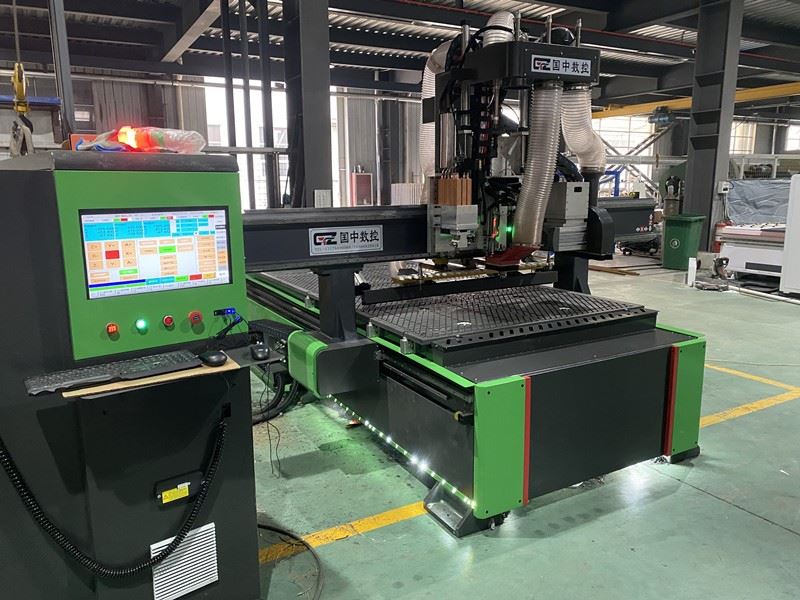

Feed System: The feed system of a planer is responsible for moving the wood through the machine. A good feed system should be able to grip the wood firmly and move it at a consistent speed. If the feed system isn't strong enough, it might struggle to move thick wood through the planer, leading to uneven cuts or even jams.
Our Product Range
As a woodworking planer supplier, we offer a wide range of planers to meet different needs. If you're looking for a versatile option, check out our Multi Functional Wood Planer Machine. It's a great choice for both small and medium - sized projects, and it can handle a decent amount of thickness per pass.
For those who need more power and precision, our KDT Woodworking Machinery is a top - notch stationary planer. It's designed for professional use and can handle relatively thick wood with ease.
And if you're in the market for industrial - grade equipment, our Roos Woodworking Machinery is the way to go. It's built to handle the thickest and toughest wood, making it ideal for large - scale manufacturing.
Choosing the Right Planer for Your Needs
When you're deciding which planer to buy, think about the types of projects you'll be working on. If you're mainly doing small DIY projects around the house, a handheld planer might be sufficient. But if you're planning to build furniture or work on larger pieces of wood, a stationary planer is a better investment.
Also, consider your budget. Handheld planers are generally more affordable, while stationary planers can range from moderately priced to very expensive, depending on their features and capabilities.
Conclusion
So, to sum it up, the maximum thickness a woodworking planer can handle depends on its type, motor power, cutting blade design, and feed system. Handheld planers are limited to around 1/8 to 1/4 inch per pass, while stationary planers can handle anywhere from 3 inches to 8 inches or more, depending on their size and grade.
If you're interested in purchasing a woodworking planer or have any questions about our products, feel free to reach out. We're here to help you find the perfect planer for your woodworking needs. Let's start a conversation and see how we can make your woodworking projects even better!
References
- Woodworking Machinery Handbook
- Professional Woodworking Magazine


