

In the realm of modern manufacturing, the ATC CNC Machining Center stands as a cornerstone of precision and efficiency. As a prominent [Your Company Role] specializing in the supply of ATC CNC Machining Centers, I've witnessed firsthand the transformative impact these machines have on various industries. One critical aspect that ensures the consistent performance of these centers is the calibration of tools. In this blog, I'll delve into how the ATC CNC Machining Center handles the calibration of the tool, exploring the processes, technologies, and best practices involved.
Understanding the Importance of Tool Calibration
Before we dive into the calibration process, it's essential to understand why tool calibration is so crucial. In a ATC CNC Machining Center, the accuracy of the tool directly influences the quality of the machined parts. Even the slightest deviation in tool dimensions or position can lead to errors in the final product, resulting in scrap parts, rework, and increased production costs.
Calibration helps to ensure that the tool is cutting at the correct depth, with the right feed rate, and in the proper position relative to the workpiece. This not only improves the accuracy of the machined parts but also extends the life of the tool by reducing wear and tear. Additionally, calibrated tools can operate at higher speeds and feeds, increasing productivity and efficiency in the machining process.
The Calibration Process in an ATC CNC Machining Center
The calibration process in an ATC CNC Machining Center typically involves several steps, each designed to ensure the accuracy and reliability of the tool.
1. Tool Presetting
The first step in the calibration process is tool presetting. This involves measuring the tool's dimensions, such as its length, diameter, and cutting edge geometry, outside of the machine. Tool presetters are specialized devices that use precision measurement techniques to accurately determine these dimensions.
During tool presetting, the operator mounts the tool in the presetter and uses the device's measurement capabilities to record the tool's dimensions. These measurements are then entered into the CNC machine's control system, which uses them to calculate the tool's position and compensation values.
Tool presetting offers several advantages. It allows for faster tool changes, as the tool is already calibrated and ready to use when it is loaded into the machine. It also reduces the downtime of the machine, as the operator can preset multiple tools while the machine is running, minimizing the time spent on tool changes.
2. Tool Loading and Initial Setup
Once the tool has been preset, it is loaded into the ATC (Automatic Tool Changer) of the CNC machine. The ATC is a mechanism that stores and changes tools automatically during the machining process.
After the tool is loaded into the ATC, the operator performs an initial setup on the machine. This involves positioning the tool in the spindle and performing a rough alignment to ensure that it is approximately in the correct position relative to the workpiece.
3. Tool Offset Measurement
The next step in the calibration process is tool offset measurement. This involves measuring the actual position of the tool relative to the machine's coordinate system. Tool offsets are used to compensate for any differences between the preset tool dimensions and the actual position of the tool in the machine.
There are several methods for measuring tool offsets in an ATC CNC Machining Center. One common method is to use a tool setter, which is a device that uses a probe to measure the position of the tool. The tool setter is mounted on the machine's table, and the operator moves the tool into contact with the probe to measure its position.
Another method is to use the machine's touch probe. Touch probes are sensors that can be used to measure the position of the tool by making contact with it. The touch probe is mounted on the spindle, and the operator moves the tool into contact with the workpiece or a reference surface to measure its position.
Once the tool offset has been measured, the operator enters the offset values into the CNC machine's control system. The control system uses these values to adjust the tool's position during the machining process, ensuring that it cuts at the correct depth and in the proper position relative to the workpiece.
4. In-Process Calibration
In addition to the initial calibration steps, many ATC CNC Machining Centers also support in-process calibration. This involves monitoring the performance of the tool during the machining process and making adjustments as needed to ensure its accuracy.
In-process calibration can be achieved using a variety of techniques, such as tool wear monitoring, force monitoring, and acoustic emission monitoring. These techniques allow the CNC machine to detect changes in the tool's performance, such as wear, breakage, or deflection, and make adjustments to the tool's position or cutting parameters to compensate for these changes.
For example, tool wear monitoring systems use sensors to measure the wear of the tool's cutting edge. As the tool wears, the system can automatically adjust the tool's offset values to maintain the correct cutting depth. Force monitoring systems measure the cutting forces exerted by the tool during the machining process. If the cutting forces exceed a certain threshold, the system can adjust the feed rate or spindle speed to prevent tool breakage.
Technologies Used in Tool Calibration
Several technologies are used in tool calibration in an ATC CNC Machining Center to ensure the accuracy and reliability of the process.
1. Laser Measurement Systems
Laser measurement systems are commonly used in tool presetters and tool setters to measure the tool's dimensions and position. These systems use laser beams to measure the distance between the tool and the measuring device, providing high-precision measurements with a high degree of accuracy.
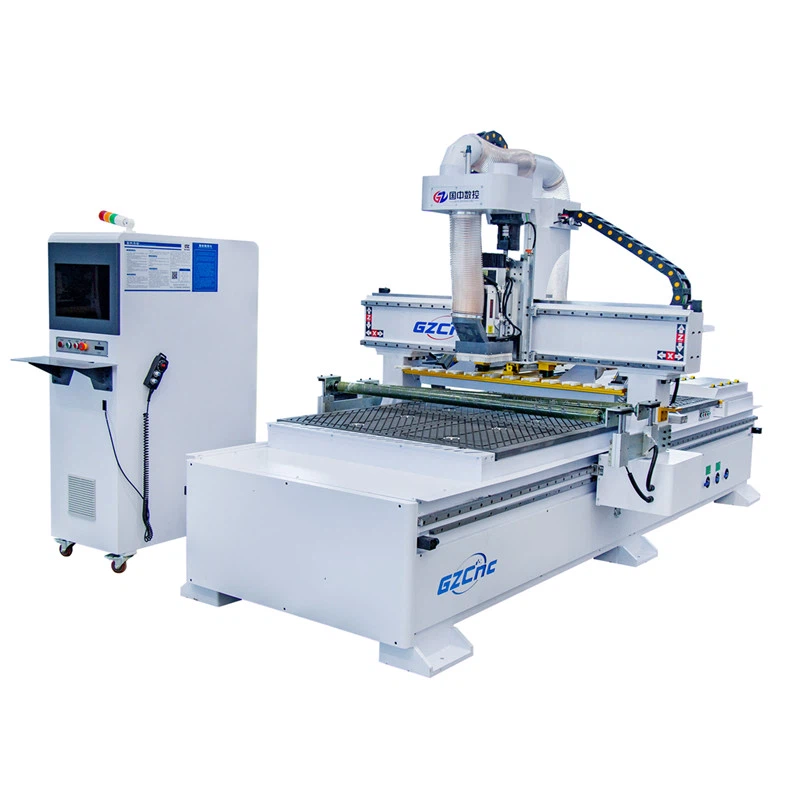

Laser measurement systems offer several advantages over traditional measurement methods. They are non-contact, which means they do not damage the tool during the measurement process. They are also fast and efficient, allowing for quick and accurate measurements.
2. Probing Systems
Probing systems, such as touch probes and tool setters, are another important technology used in tool calibration. These systems use sensors to measure the position of the tool relative to the machine's coordinate system.
Touch probes are typically used for in-process measurement and calibration. They can be used to measure the position of the workpiece, the tool, or other features on the machine. Tool setters, on the other hand, are used for tool presetting and offset measurement. They are designed to accurately measure the tool's dimensions and position outside of the machine.
3. CNC Control Systems
The CNC control system is the brain of the ATC CNC Machining Center. It is responsible for controlling the movement of the machine's axes, the operation of the spindle, and the execution of the machining program.
The CNC control system also plays a crucial role in tool calibration. It stores the tool's preset dimensions and offset values, and uses them to calculate the tool's position and compensation values during the machining process. The control system can also monitor the performance of the tool and make adjustments as needed to ensure its accuracy.
Best Practices for Tool Calibration in an ATC CNC Machining Center
To ensure the accuracy and reliability of tool calibration in an ATC CNC Machining Center, it is important to follow some best practices.
1. Regular Maintenance and Inspection
Regular maintenance and inspection of the tool presetters, tool setters, and other calibration equipment are essential to ensure their accuracy and reliability. This includes cleaning and lubricating the equipment, checking for wear and tear, and calibrating the equipment periodically.
2. Training and Certification
Operators who are responsible for tool calibration should receive proper training and certification. They should be familiar with the calibration process, the operation of the calibration equipment, and the CNC machine's control system. Training should also include safety procedures and best practices for handling tools and calibration equipment.
3. Documentation and Record-Keeping
It is important to maintain accurate documentation and records of the tool calibration process. This includes recording the tool's preset dimensions, offset values, and calibration dates. Documentation can help to track the performance of the tool over time, identify any trends or issues, and ensure that the calibration process is being carried out correctly.
4. Quality Control Checks
Regular quality control checks should be performed on the machined parts to ensure that the calibration process is working effectively. This can include measuring the dimensions of the parts, checking the surface finish, and performing other inspections to ensure that the parts meet the required specifications.
Conclusion
Tool calibration is a critical aspect of the operation of an ATC CNC Machining Center. It ensures the accuracy and reliability of the tool, improves the quality of the machined parts, and increases productivity and efficiency in the machining process.
By following the calibration process, using the right technologies, and implementing best practices, manufacturers can ensure that their ATC CNC Machining Centers are operating at their best. If you are interested in learning more about our ATC CNC Machining Centers, Wood CNC Machining Centers, or ATC CNC Routers, please feel free to contact us for more information and to discuss your specific requirements. We are committed to providing high-quality products and services to help you achieve your manufacturing goals.
References
- "CNC Machining Handbook" by Peter A. Ostwald and Paul Munoz
- "Tool Presetting and Measurement" by the Society of Manufacturing Engineers
- "Advanced CNC Programming and Machining" by David A. Dornfeld


