

Hey there! As a supplier of vacuum laminating machines, I often get asked a bunch of questions about what these machines can and can't do. One question that pops up quite a bit is, "Can a vacuum laminating machine be used for laminating heat-resistant materials?" Well, let's dig into this topic and find out.
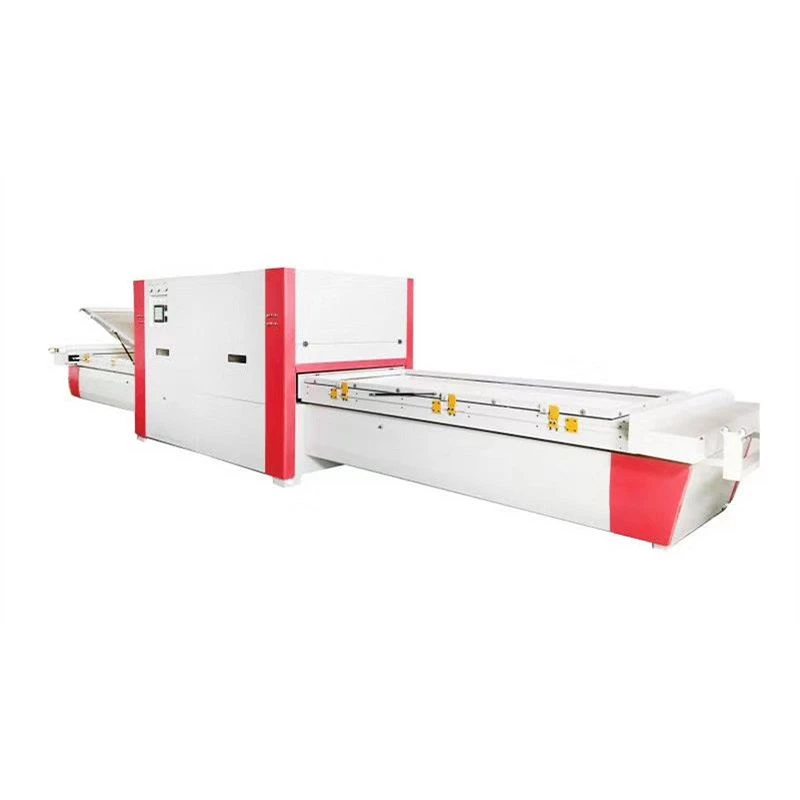
First off, let's talk a bit about what a vacuum laminating machine actually does. These machines work by creating a vacuum environment to bond different layers of materials together. The vacuum helps to remove air bubbles and ensures a tight, even bond between the layers. This process is widely used in various industries, from woodworking to electronics, for things like applying decorative films, laminating circuit boards, and more.
Now, when it comes to heat-resistant materials, the answer isn't a simple yes or no. It depends on a few factors, like the type of heat-resistant material, the specific vacuum laminating machine you're using, and the laminating process itself.
Let's start with the types of heat-resistant materials. There are many different kinds out there, such as ceramic fibers, asbestos (although its use is restricted in many places due to health concerns), and some high-performance plastics. Each of these materials has its own unique properties, like different melting points, coefficients of thermal expansion, and chemical compositions.
For instance, ceramic fibers are known for their excellent heat resistance and can withstand extremely high temperatures. They're often used in applications where insulation and fire protection are crucial. On the other hand, high-performance plastics like PEEK (polyether ether ketone) have good heat resistance and mechanical properties, making them suitable for use in aerospace and automotive industries.
When using a vacuum laminating machine with heat-resistant materials, the machine's capabilities play a huge role. Some vacuum laminating machines are designed to handle high temperatures, while others are more suited for lower-temperature applications. If you're dealing with a material that requires a high lamination temperature, you'll need a machine that can reach and maintain that temperature consistently.
Most of the vacuum laminating machines we supply at our company are equipped with advanced heating systems that can provide precise temperature control. This is important because if the temperature is too low, the lamination might not be strong enough, and if it's too high, it could damage the heat-resistant material.
Another factor to consider is the pressure applied during the lamination process. In a vacuum laminating machine, the pressure helps to ensure a good bond between the layers. Different heat-resistant materials may require different levels of pressure to achieve the best results. For example, some materials might need a higher pressure to overcome their natural stiffness and conform to the shape of the substrate.
Now, let's talk about the actual laminating process. When laminating heat-resistant materials, you need to make sure that the surface of the material is clean and free of any contaminants. Even a small amount of dust or grease can affect the quality of the lamination. You might also need to use a special adhesive that can withstand the high temperatures and chemical environment of the heat-resistant material.
In some cases, pre-treatment of the heat-resistant material might be necessary. This could involve processes like sanding, priming, or heat-treating to improve the adhesion between the layers. The pre-treatment steps can vary depending on the specific material and the requirements of the lamination.
Let's take a look at some real-world applications where vacuum laminating machines are used with heat-resistant materials. In the woodworking industry, heat-resistant laminates are often applied to door panels using a Door Panel Blister Machine. These laminates not only provide a decorative finish but also offer protection against heat and wear.
In the electronics industry, Blister Vacuum Laminating Machine are used to laminate heat-resistant films onto circuit boards. This helps to protect the delicate electronic components from high temperatures and environmental factors.
And for the sliding door industry, Sliding Door Blister Machine are employed to apply heat-resistant coatings to the door surfaces. This enhances the durability and performance of the sliding doors, especially in areas with high temperatures or direct sunlight.
So, to answer the question, yes, a vacuum laminating machine can be used for laminating heat-resistant materials, but it's important to choose the right machine and follow the proper procedures. If you're in the market for a vacuum laminating machine for heat-resistant materials, we're here to help. Our team of experts can assist you in selecting the most suitable machine for your specific needs. We offer a wide range of vacuum laminating machines with different features and capabilities, and we can also provide you with technical support and training to ensure that you get the best results.
Whether you're a small business looking to expand your production capabilities or a large corporation in need of a high-volume laminating solution, we've got you covered. We understand that every customer is unique, and we're committed to providing personalized service and customized solutions.
If you're interested in learning more about our vacuum laminating machines or have any questions about laminating heat-resistant materials, don't hesitate to reach out. You can contact us to start a conversation about your requirements, and we'll work with you to find the perfect solution for your business.
In conclusion, vacuum laminating machines are versatile tools that can be used effectively with heat-resistant materials, as long as you take into account the material properties, machine capabilities, and the proper laminating process. So, if you're thinking about using a vacuum laminating machine for your heat-resistant material projects, give us a call and let's explore the possibilities together.
References

- "Handbook of Laminating Technology" by James A. Ciullo
- "Heat-Resistant Materials: Properties and Applications" by John R. Davis


